Blog
How Lean and Six Sigma Practices Enhance Quality and Efficiency in Transformer Core Manufacturing
The worldwide increase in electricity consumption requires transformer manufacturers to create dependable power systems. The transformer core presents a challenge because its magnetic characteristics and physical dimensions determine transformer functioning. The production process requires high-quality materials to achieve consistent results. The process demands complete dedication to the manufacturing system, which starts with transformer core manufacturing methods.
The manufacturing process relies on Lean and Six Sigma methods. The two methods work together to eliminate waste and decrease defects while they drive manufacturing operations throughout all production phases. The manufacturing operations of Mangal Electrical Industries Ltd., which produce CRGO laminations, slit coils and core assemblies, rely on these approaches to maintain their market position.
Understanding Lean and Six Sigma in Manufacturing
What Is Lean Manufacturing?
Lean removes what doesn't add value: excess steps, idle inventory and wasted motion. In transformer core production, it streamlines lamination cutting, stacking and assembly so materials flow faster without sacrificing accuracy.
What Is Six Sigma in Manufacturing?
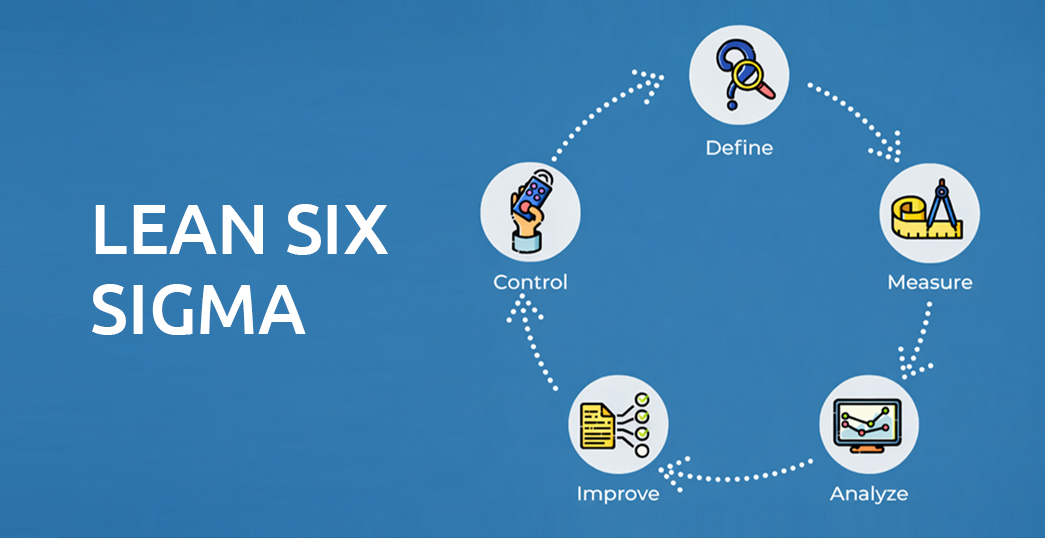
Six Sigma in manufacturing uses data-driven methods to identify and eliminate. The DMAIC system of Define, Measure, Analyze, Improve and Control enables teams to identify and solve quality issues throughout the entire process.
Why Lean and Six Sigma Work Together
Lean speeds up production. Six Sigma in manufacturing makes it more accurate. In transformer core manufacturing, small magnetic or dimensional variations cause real energy losses, so both matter.
Importance of Quality Control in Transformer Core Manufacturing
Consistent Performance of Transformer Cores
Cores must maintain precise magnetic properties and tight dimensional tolerances over their service life. Strong quality control in manufacturing keeps energy losses in check and performance reliable.
Key Quality Parameters in Core Production
Key parameters in transformer quality control in manufacturing include lamination thickness, stacking accuracy, magnetic flux density, burr height and insulation integrity; each one affects core efficiency directly.
Testing and Compliance Standards
Lab testing verifies magnetic properties before shipment. NABL accreditation and approvals from NTPC and PGCIL confirm a manufacturer's quality systems meet established industry standards for quality control in manufacturing.
Applying Lean Practices for Manufacturing Efficiency Improvement
Waste Reduction in Core Production
CRGO steel is costly. Lean cuts unnecessary material handling and tightens inventory management, reducing costs without compromising quality.
Streamlined Production Workflows
Efficient flow from CRGO slit coils through lamination cutting to assembly depends on removing bottlenecks at every stage; that's where real manufacturing efficiency improvement is achieved.
Continuous Process Monitoring
Real-time production monitoring lets teams catch inefficiencies early, keeping Lean active as a daily practice rather than a one-off project.
How Six Sigma Drives Process Improvement in Manufacturing
- Data-Driven Decision Making: Real process improvement in manufacturing starts with measurement. Six Sigma uses process data to pinpoint where defects come from, so improvements are targeted, not guesswork.
- Root Cause Analysis: Whether the problem is material inconsistency, equipment drift or operator error, Six Sigma traces it to the source. Fixing root causes is how gains stick.
- Standardized Production Processes: The Control phase locks improvements into documented standards, consistent lamination dimensions, repeatable assembly steps and uniform testing criteria across every run.
Lean and Six Sigma in Transformer Core Production
- Precision Lamination Processing: Accurate silicon steel lamination cutting minimizes magnetic losses from the first step. Advanced machinery keeps dimensions tight and burr levels low, directly affecting stacking quality and core efficiency.
- Efficient Core Assembly Techniques: Step-lap stacking and precise lamination alignment improve magnetic flux flow and reduce air-gap losses. Consistent application through Lean workflows helps manufacturers meet the tolerances modern transformer specs demand.
How Mangal Electrical Industries Applies Lean Six Sigma
Mangal Electrical Industries Ltd. (MEIL), established in 1990 and ISO 9001:2015 certified, applies Lean by running integrated facilities in Jaipur where CRGO slit coils, laminations, core assemblies and amorphous metal transformer cores are all produced under one roof, cutting handling waste and lead times. Its NABL-accredited Brockhaus Laboratory drives Six Sigma decisions by measuring lamination thickness, burr height and flux density to minimize variation. PGCIL approval for 765 kV class projects and certifications from NTPC, BHEL and RDSO confirm its quality record.
MEIL also manufactures amorphous metal transformer cores using Metglas® material. Amorphous metal has no crystalline grain structure, keeping hysteresis losses very low. At 0.025 mm thick, roughly one-tenth of silicon steel, it reduces eddy current losses too, cutting total no-load loss to about one-fifth. MEIL supplies CRGO steel slit coils for conventional transformer core applications.
Quality Testing and Performance Validation
Every component is tested before shipping, confirming magnetic performance, energy efficiency and reliability, so Lean and Six Sigma improvements show up in the finished product.
Benefits of Lean and Six Sigma for Transformer Manufacturers
Improved Product Quality
Fewer defects and more consistent output mean fewer field failures and greater customer trust in the components they receive through rigorous quality control in manufacturing.
Higher Manufacturing Efficiency
Faster production cycles and smarter use of equipment and labor let manufacturers scale up without letting quality slip.
Cost Reduction and Sustainability
The industry strives to achieve environmentally friendly operations through its two main goals of reducing waste and minimizing rework activities, which lead to decreased operational expenses and material use.
Future of Process Optimization in Transformer Manufacturing
Integration of Smart Manufacturing
The Lean and Six Sigma frameworks now include automation together with real-time analytics and digital monitoring, which enable organizations to identify process deviations and take corrective action before product quality deterioration occurs.
Continuous Improvement Culture
The Lean and Six Sigma methodologies maintain their effectiveness because organizations implement continuous training programs and establish genuine systems for improvement.
Supporting Global Energy Infrastructure
High-quality transformer cores reduce transmission losses and improve grid reliability. As energy systems worldwide modernize, the quality of individual components matters more than ever.
The Bureau of Energy Efficiency (Government of India) states that improved transformer efficiency enables power distribution systems to achieve sustainable energy efficiency while decreasing energy losses that occur over time.
Conclusion
Lean and Six Sigma are practical tools that produce measurable results in quality control in manufacturing and overall transformer core manufacturing performance. By committing to real process improvement in manufacturing and sustained manufacturing efficiency improvement, companies can produce transformer components that are more consistent, efficient and cost-effective.
As the power infrastructure continues to evolve, these methods will increasingly become more important. Companies like Mangal Electrical Industries Ltd, with a focus on excellent core quality control in manufacturing practices and more advanced manufacturing methods, demonstrate what is possible when process discipline forms a core part of business operations.