Blog
Amorphous Core Transformer vs CRGO Transformer: Which Is More Efficient
Electricity demand is increasing, and so is the need to reduce waste. Utilities, industries and grid operators are all being asked to do more with less and transformer efficiency is one of the most direct levers they have. The Ministry of Power has also highlighted that high transmission and distribution losses remain a major challenge in India’s power sector, making efficient transformer technology more important than ever.
But here's the thing: transformer efficiency isn't only about the windings or the design. A lot of it comes down to one component that usually doesn't get enough attention: the core. Choose the wrong core material and you're building in losses that no amount of good engineering elsewhere can fix.
Two technologies dominate this conversation today: the amorphous core transformer and the CRGO transformer. Both work and have real advantages. But they suit different conditions and knowing the difference can save a lot of money over the life of the equipment. Advancements in amorphous metal transformers and CRGO cores are already helping industries improve energy performance, so it's worth understanding how each one actually behaves.
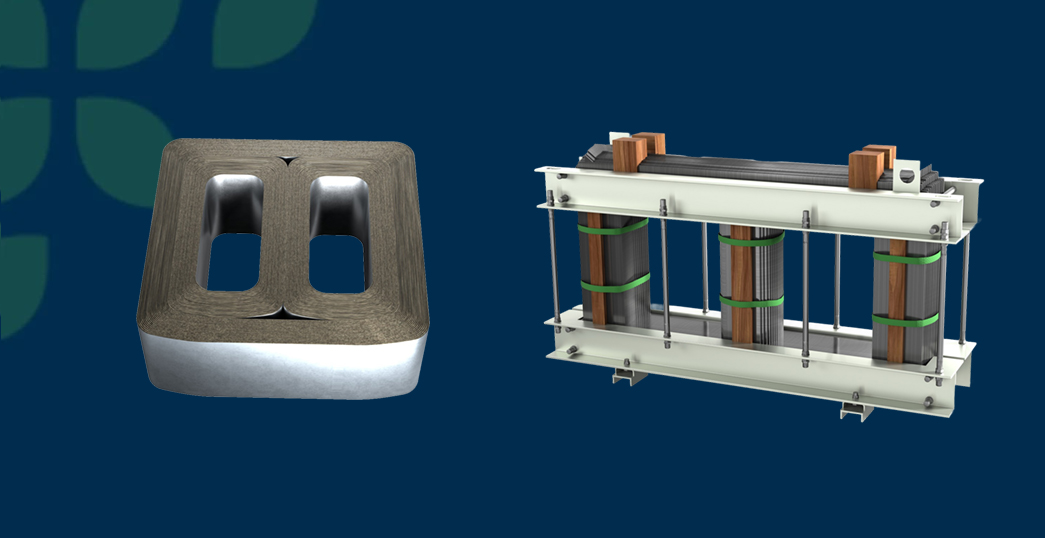
Understanding Transformer Core Materials
The core material is essential to a transformer's efficiency, as it directly determines its magnetic properties. These materials influence how the transformer performs under different loads and conditions.
What Is a CRGO Transformer Core?
CRGO (Cold Rolled Grain Oriented) silicon steel is the cornerstone of traditional transformer technology. Its high magnetic permeability allows it to control magnetic flux effectively, making it ideal for use in distribution and power transformers. By aligning the steel grains in a preferred direction, CRGO transformers achieve higher flux densities and greater efficiency.
These cores have been the standard in transformer manufacturing for decades, widely adopted for their proven ability to support large-scale power distribution.
What Is an Amorphous Core Transformer?
An amorphous transformer core uses a core made of amorphous steel, also known as amorphous metal. Unlike traditional grain-oriented steel, amorphous materials lack a crystalline structure, making them highly efficient in decreasing energy losses. Amorphous steel is generally made of iron-based alloys that form thin ribbons during the manufacturing procedure. Its non-crystalline structure helps reduce hysteresis losses, a major contributor to losses in traditional transformers. It is also why an amorphous steel transformer is usually preferred in applications where minimizing energy loss is necessary
How an Amorphous Transformer Core Works
Structure of Amorphous Alloy Transformer Materials
The rapid cooling procedure produces an extremely thin ribbon, approximately 0.025 mm thick. To put that in perspective, that is roughly one-tenth the thickness of a standard silicon steel lamination. That thinness matters because eddy current losses scale with material thickness. Thinner material means smaller circulating currents, which means less wasted energy. The amorphous material also has higher electrical resistance, which further limits those eddy currents.
At Mangals, amorphous transformer cores are built with bonded edges to simplify assembly and each core undergoes magnetic-field annealing to relieve internal stress and enhance magnetic properties. The outcome is a core that's both thermally regular and genuinely efficient.
Magnetic Performance Benefits
Put those two properties together, a non-crystalline structure and an ultra-thin ribbon and you get a core that can reduce no-load losses to roughly one-fifth of what a silicon steel core produces under the same conditions. For a distribution transformer that is energized around the clock, that's a significant number. No-load losses occur whether the transformer is serving any load or not, so reducing them directly impacts baseline energy consumption across the whole network.
Key Differences Between Amorphous Core and CRGO Transformers
While both amorphous core transformers and CRGO transformers are efficient, their performance varies across applications. Let’s explore the main differences between these two core types.
Core Loss and Energy Efficiency
It is the most important difference. Amorphous cores produce substantially lower no-load losses than CRGO steel cores. Since a transformer is always drawing energy when it's energized, even at zero load, that reduction directly lowers operating costs and overall efficiency over the equipment's lifetime.
Magnetic Flux Density
CRGO has the edge here. It supports higher magnetic flux density, enabling more compact transformer designs at a given power rating. Amorphous cores typically require a larger cross-section to achieve the same power capacity, a real trade-off that buyers need to factor into their decisions.
Material Thickness and Electrical Resistance
At 0.025 mm, amorphous laminations are far thinner than silicon steel sheets. Combined with higher electrical resistance, this construction dramatically reduces eddy current losses, one of the two main contributors to core loss in any transformer.
Noise and Heat Generation
Lower core losses also represent less magnetostriction, the physical vibration of the core material as the magnetic field alternates. The practical result is that amorphous transformer cores run quieter and cooler than their CRGO equivalents, which is worth considering in noise-sensitive or thermally constrained installations.
Advantages of CRGO Core Transformers
Higher Flux Density and Compact Design
CRGO cores let transformers operate at higher magnetic flux densities, which means more power in a smaller, lighter package. Where physical space is limited or weight matters, this is a genuine advantage.
Established Manufacturing Technology
Decades of development mean that CRGO manufacturing is highly refined. Production processes are standardized, quality is consistent, and there is a deep global pool of engineering experience to draw on.
Cost and Availability
CRGO material generally costs less up front than amorphous alloys. For projects where initial capital cost is the binding constraint and where the operating profile doesn't heavily penalize no-load losses, CRGO is still a very competitive choice.
Which Transformer Core Is More Efficient
Performance in Distribution Transformers
For continuously energized distribution transformers, amorphous-core transformers offer a clear efficiency advantage. The reduction in no-load losses over the years of operation is large enough to justify the higher material cost in most life cycle cost analysis.
Performance in High-Power Applications
In large power transformers running at consistently high load factors, the picture changes. At heavy loads, copper losses begin to dominate core losses, narrowing the efficiency gap. CRGO's higher flux density also allows for more practical designs at high power ratings. In these applications, CRGO may still be the better engineering choice. Balancing Efficiency, Cost and Application
Balancing Efficiency, Cost and Application
Honestly, there's no single right answer. The best core material depends on the load profile, efficiency requirements, available footprint and long-term energy cost assumptions for each specific application. A lightly loaded distribution transformer benefits enormously from an amorphous core. A large substation transformer at high utilization may not see the same payoff.
Role of Advanced Manufacturing in Transformer Efficiency
Precision Core Manufacturing
The material only performs as well as the manufacturing allows. Accurate cutting, proper annealing and careful lamination assembly are all critical to preserving the magnetic properties that make either CRGO or amorphous cores effective. Small deviations, burrs on cut edges, incorrect annealing temperatures and misaligned laminations can quietly erode performance, only becoming apparent in service.
High-Quality Materials and Testing
Mangals manufactures amorphous metal transformer cores using Metglas® amorphous metal, with testing built into every stage of production, including dimensional checks, stress-relief magnetic-field annealing and performance verification before anything leaves the facility. Mangals supplies transformer components to customers across global markets, with export support and manufacturing operations spread across multiple facilities in Rajasthan, India.
Custom Transformer Core Solutions
Mangals produces amorphous alloy transformer cores for both single-phase and three-phase distribution transformers, tailored to customer specifications. CRGO products, slit coils, core laminations and complete core assemblies are also available, so buyers can source both technologies through one reliable partner.
Conclusion
Both amorphous core transformers and CRGO transformers have genuine strengths. Amorphous cores offer lower losses and better efficiency for distribution applications and modern grid networks. CRGO cores remain the practical choice where high flux density, compact design and lower upfront cost matter most.
The right decision depends on what the application actually demands, including long-term energy plans, not only the purchase price. If you're looking for a manufacturing partner capable of supplying both technologies to a high standard, visit Mangal Electrical Industries Ltd to learn more.